
Soul Men, Memphis Horns, and a City Still Divided
SOUL SECRET INGREDIENTS: DAVID PORTER, ISAAC HAYES, AND THE MEMPHIS HORNS
At Motown, a finely tuned creative machine turned out hit after hit, powered by elite songwriters, seasoned session musicians, and indispensable background vocalists. But hundreds of miles south in Memphis, Stax Records was building its own hit-making operation—grittier, looser, and every bit as formidable. Songwriter David Porter teamed with Steve Cropper to write the first Stax single for Sam & Dave, featuring Sam Moore and Dave Prater. The record was a promising start, but Porter sensed he was still missing something. He wanted a true creative counterpart—someone who could challenge his ideas, expand his musical instincts, and help shape the kind of songs neither could have written alone.
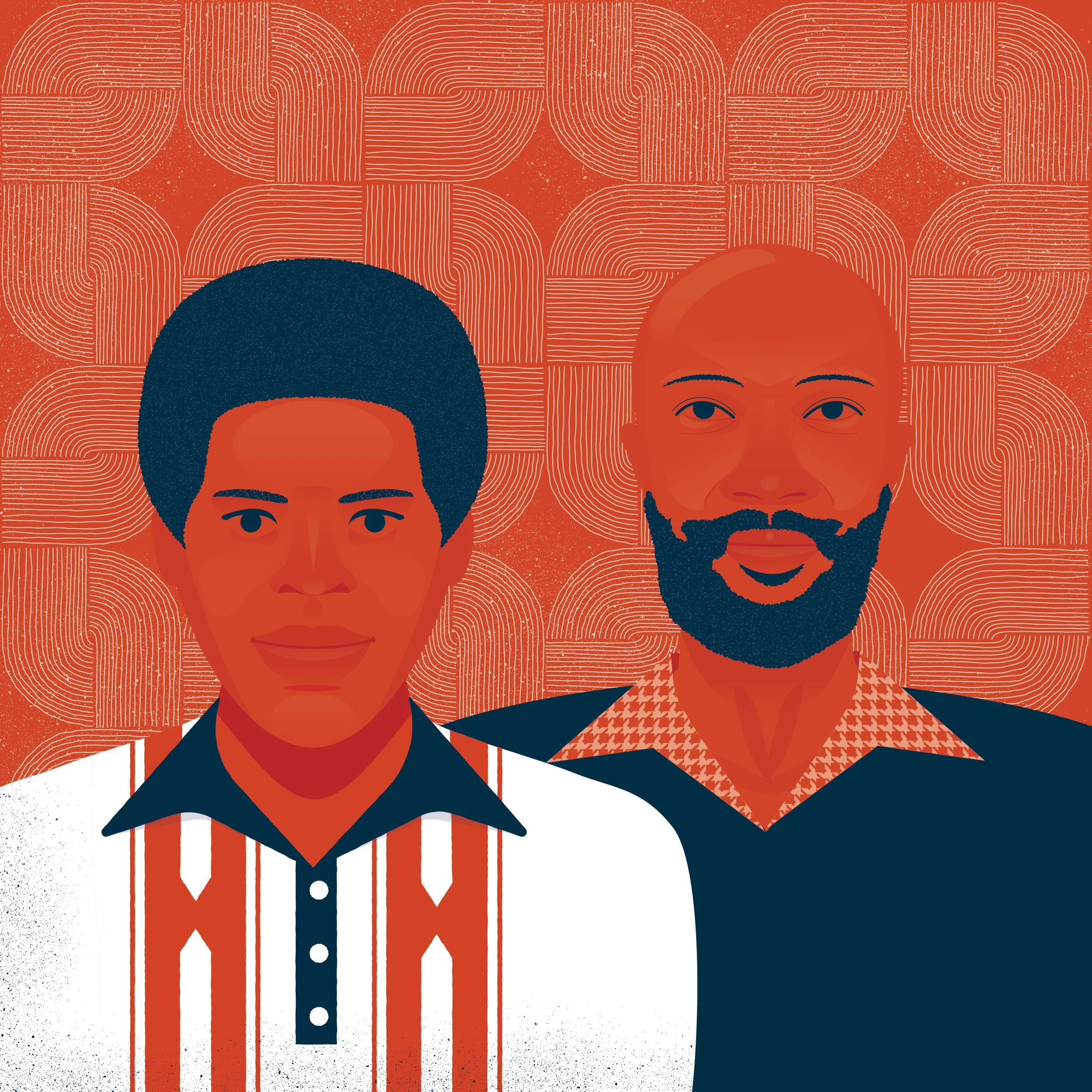
David Porter and Isaac Hayer. Illustration by J.D. Humphreys
• THE PORTER HAYES COLLABORATION •
As Isaac Hayes later recalled in Respect Yourself: Stax Records and the Soul Explosion, his partnership with Porter began in an unlikely way. “David approached me with the intention of selling me an insurance policy,” Hayes remembered. “During our conversation, we discovered that we had similar interests. He said, ‘Ike, I’m a lyric man, and you’re a music man, let’s do like Holland–Dozier–Holland and Burt Bacharach and Hal David.’” It was a straightforward suggestion, but one that would soon take both men in a direction neither could have fully anticipated.
 Like many musicians and songwriters of the era, the artists at Stax Records admired what Motown had built in Detroit. But Stax co-founder Jim Stewart made it clear that trying to out-Motown Motown was a losing proposition. Motown had pop firmly in its grasp. Stax would pursue something grittier and more visceral: raw Southern soul. The distinction was so central to the label’s identity that the awning above its converted theater studio in Memphis was emblazoned with two proud words—“Soulsville U.S.A.”—a soulful answer to Motown’s famous “Hitsville U.S.A.” sign.
“I felt if the singer was right above where they should be, then the anxiety and the frustration and the soul would come through,” Porter said years later. “I always noticed with Motown Records, the singers were so comfortable. I wanted us to have a little different edge. I didn’t think you were really doing a record with any soul unless there was sweat.”
“I didn’t think you were really doing a record with any soul unless there was sweat.”
- David Porter
As Hayes later explained, success did not arrive overnight. “After fifteen or twenty duds, we began to find our niche. We experimented a lot. That’s why we had so much success for Sam & Dave, because I would try new types of melodies and new horn riffs and different sounds,” Hayes said. The breakthrough came not from following a formula, but from the willingness of Hayes and Porter to keep pushing, refining, and experimenting until they discovered a sound that was unmistakably their own.
When “I Take What I Want” failed to chart for Sam & Dave in 1965, Porter and Hayes did what they would do repeatedly throughout their partnership: they kept working. Hayes drew inspiration from the gospel song “You Don't Know Like I Know,” reworking its lyrics and transforming its church roots into a driving soul record. With Al Bell now taking a larger role in promoting Stax Records releases, the single became the duo’s first major breakthrough that same year, reaching No. 7 on the R&B chart and No. 90 on the Billboard Hot 100. It was the spark that ignited an extraordinary run: eight consecutive singles would reach the R&B Top 20, four would crack the Top 5, and two would climb all the way to No. 1.
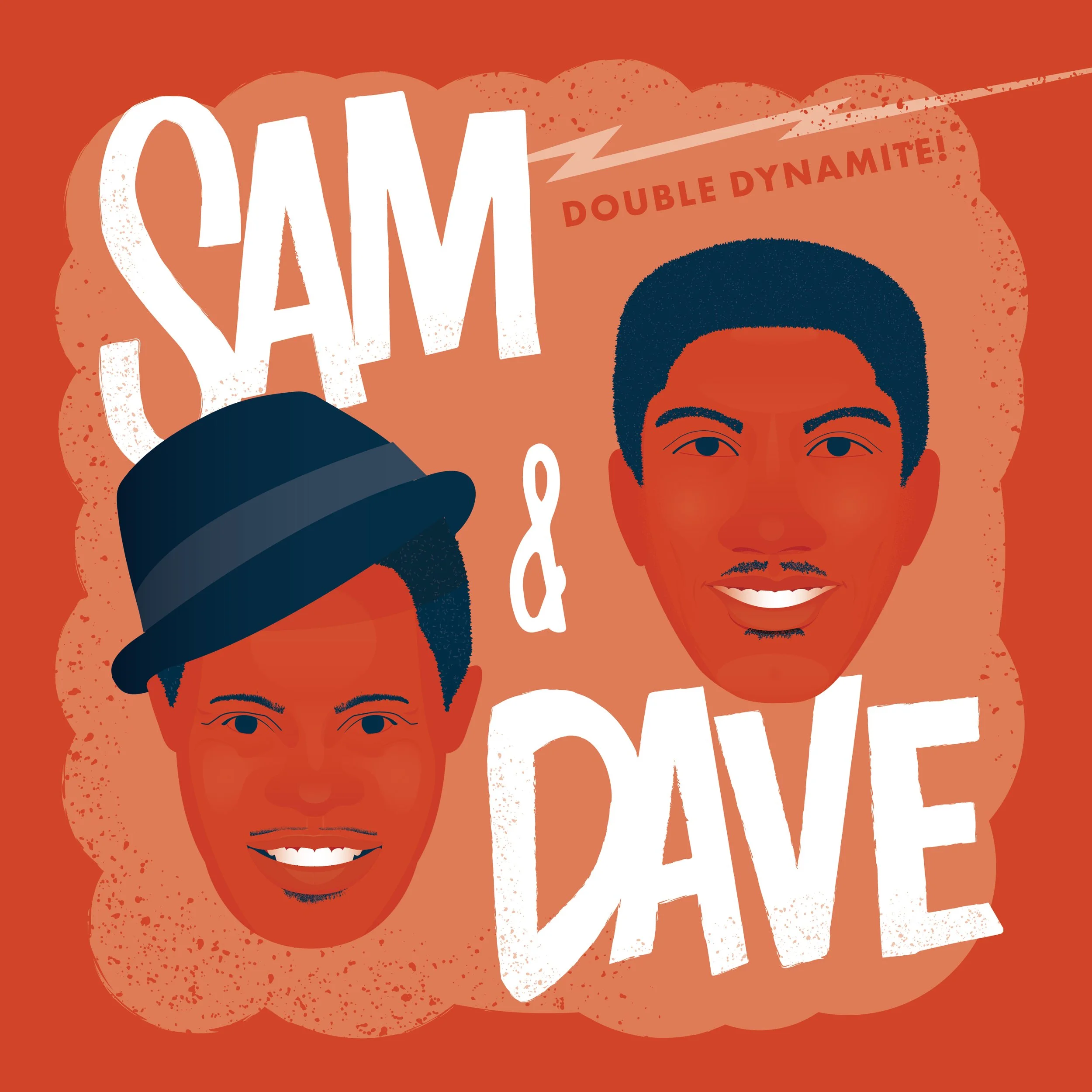
Sam & Dave. Illustration by J.D. Humphreys
• SOUL MUSIC HALLOWED GROUND •
“You Don't Know Like I Know” confirmed that Isaac Hayes and David Porter had found their rhythm as collaborators. But some of their most productive writing sessions took place away from Stax Records itself. On sweltering Memphis afternoons, when the non-air-conditioned studio became unbearable and recording sessions paused until the heat subsided, Hayes and Porter often retreated to the Lorraine Motel.
Purchased in 1945 by Walter Bailey and Lorree Bailey, the Lorraine was listed in The Negro Motorist Green Book, it was one of the few places in Memphis where African Americans could stay with dignity during segregation. Just a few years later, the Lorraine would become hallowed ground in American history. On April 4, 1968, Martin Luther King Jr. was assassinated on the motel’s second-floor balcony while in Memphis to support the city’s striking sanitation workers. Today, the site is home to the National Civil Rights Museum.
“We’d go down to the Lorraine Motel and we’d lay by the pool and Mr. Bailey would bring us fried chicken and we’d eat ice cream,” Hayes said. “We’d just frolic until the sun goes down and [then] we’d go back to work.”
Hayes and Porter were not the only ones drawn to its quiet refuge. Steve Cropper and Eddie Floyd also decamped there to write Floyd’s signature hit “Knock on Wood.” Cropper later recalled that a thunderstorm rolled in that night, inspiring one of soul music’s most memorable lines: “It’s like thunder, lightning / The way you love me is frightening.” In the heat of Memphis, with songs taking shape in motel rooms and studios alike, Stax’s sound was being written one unforgettable hook at a time.
LISTEN TO “KNOCK ON WOOD” BY EDDIE FLOYD
In the winter months, they would crowd around the heater at Stax. “Ideas and creativity were just flowing,” recalls Hayes.
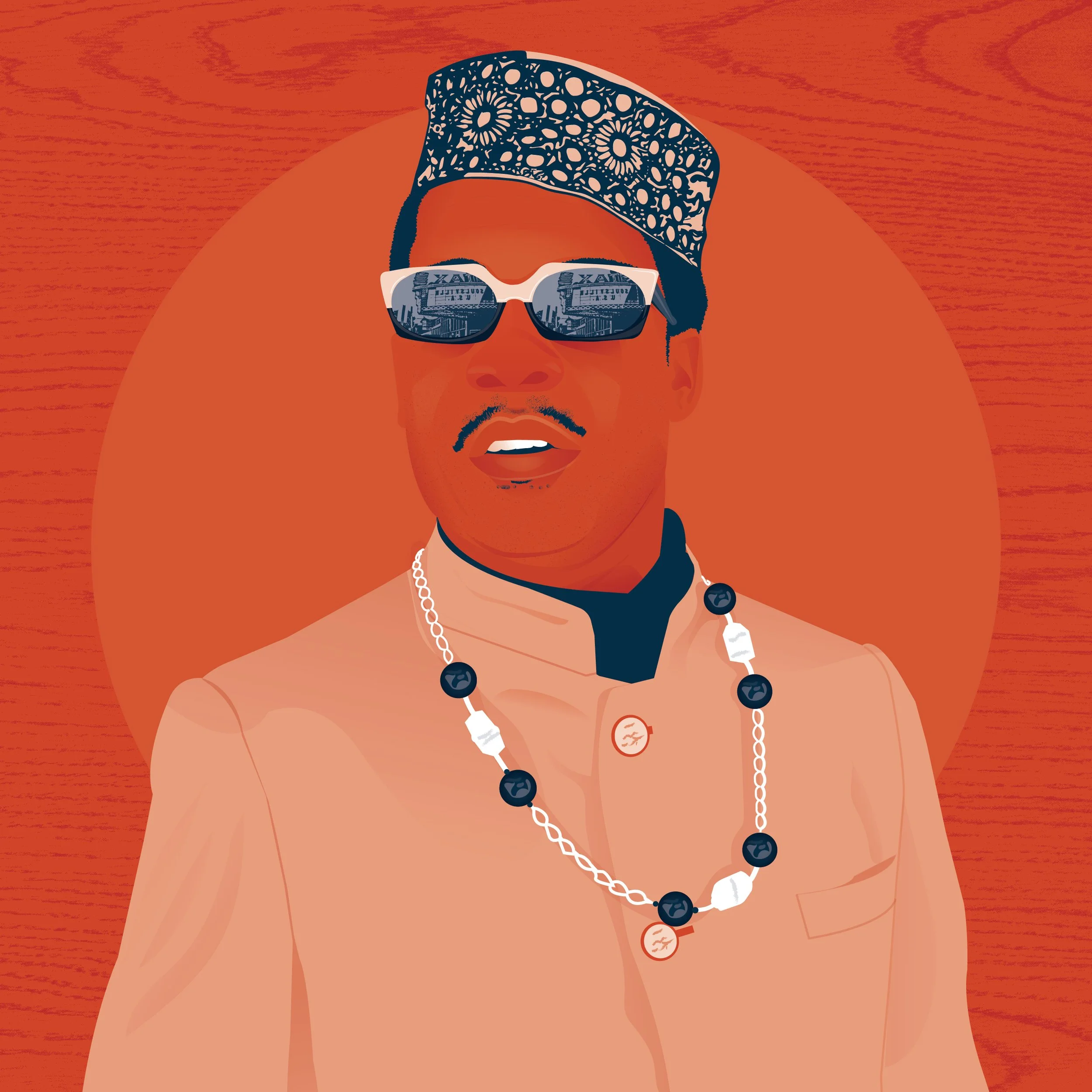
Eddie Floyd. Illustration by J.D. Humphreys
• UNEXPECTED INSPIRATION •
Hayes and Porter became nearly inseparable. They wrote together, traveled together, inspired one another, and even bought matching cars. On occasion, they worked so late into the night at Stax Records that they fell asleep beneath the studio piano, startling the secretary when she arrived the next morning.
For all of their closeness, each brought a distinct strength to the partnership. Hayes was the musical architect, crafting arrangements and shaping the sound of the band. Porter was the lyricist, vocal coach, and talent developer, guiding singers through their performances and helping cultivate the next generation of songwriters at Stax. In many ways, Porter served as a coach and mentor—recruiting new writers, leading workshops, and challenging everyone around him to reach a higher standard. Together, they formed a partnership built not only on friendship, but on a rare balance of complementary talents.
Together, Hayes and Porter found creative inspiration everywhere—in their conversations, in everyday moments, and often at home. Carla Thomas’s hit “B-A-B-Y” was inspired by Hayes’s wife, who affectionately called him “baby.” Another classic emerged when Porter returned home exhausted after a long day at Stax. Concerned, his wife asked, “What’s wrong? Is something wrong with my baby?” Porter immediately recognized the line’s potential and called Hayes. Before long, “When Something Is Wrong with My Baby” had taken shape and became yet another major hit for Sam & Dave.
LISTEN TO “B-A-B-Y” BY CARLA THOMAS
LISTEN TO “WHEN SOMETHING IS WRONG WITH MY BABY” BY SAM & DAVE

Carla Thomas. Illustration by J.D. Humphreys
• “HOLD ON, I’M COMIN’” •
One of David Porter and Isaac Hayes’s biggest hits began in the most unlikely of places: on the toilet. After a lengthy writing session, Porter stepped into the restroom while Hayes remained at the piano, working through a melody he felt was finally coming together. Eager to keep the momentum going, Hayes shouted for Porter to hurry back.
From behind the bathroom door came the response: “Hold on, I’m coming.”
Porter instantly recognized the power of the phrase. He rushed back into the studio, pants still around his thighs, waving his arms and shouting, “That’s it! That’s it! Hold on, I’m coming!”
Within minutes, the foundation for “Hold On, I'm Comin'” was in place. The song became another major hit for Sam & Dave and one of the most enduring records to emerge from Stax Records.
“That was the chemistry. Sam & Dave, Hayes and Porter,” said Sam Moore. “Just like the chemistry between Berry Gordy and Motown and between Michael Jackson and Quincy Jones. Hayes—I believed in whatever he said. His mouth, to me, was a bible.”
Released in March 1966, “Hold On, I'm Comin'” was more than a love song. Beneath its urgent groove and reassuring chorus was a broader message of support and solidarity. At the height of the Civil Rights Movement, the song carried a powerful sense of reassurance: when help was needed, someone would be there. For many listeners, that promise resonated far beyond romance and spoke to the importance of unity within the Black community.
LISTEN TO “HOLD ON, I’M COMIN’” BY SAM & DAVE
It would not be the last time Sam & Dave recorded songs that echoed themes of togetherness and mutual support. Even the album cover hinted at the playful confidence behind the music, featuring Sam and Dave perched casually atop a cartoon tortoise—a visual nod to the title and a reminder that some of the era’s most meaningful messages arrived wrapped in wit, soul, and irresistible rhythm.
• “SOUL MAN” •
With the release of “Soul Man” in 1967, Sam & Dave found major crossover when it reached number two on the U.S. Pop chart and number one on the R&B chart. “The cannon exploded on ‘em then,” said Newton Collier, who played trumpet for Sam & Dave’s releases. “I mean, we had more work that we could actually do. I mean it was no such thing as a day off, and at one time, we were just going from one gig to the other.”
When “Soul Man” was released in 1967, Sam & Dave achieved the kind of crossover success that few Southern soul acts had ever experienced. The record reached No. 2 on the U.S. pop chart and No. 1 on the R&B chart, transforming the duo into national stars and sending their touring schedule into overdrive.
“The cannon exploded on ‘em then.”
- Newton Collier
“The cannon exploded on ‘em then,” recalled Newton Collier, who played trumpet on many of Sam & Dave’s recordings. “I mean, we had more work that we could actually do. I mean it was no such thing as a day off, and at one time, we were just going from one gig to the other.”
The success of “Soul Man” carried Sam & Dave straight into the heart of Motown. When they arrived in Detroit to perform at the legendary Twenty Grand, they were no longer a promising Southern act—they were stars. They “wore the city out,” Collier said. “We went right into the mouth, right into the mouth of the lion [Motown]. We played their own theater. We had all the The Temptations, all the Motown executives, all of ‘em standing there and Sam & Dave put on a show—we were booked there for seven…no, ten nights.”
“We went right into the mouth, right into the mouth of the lion [Motown].
- Newton Collier
• ESTELLE AXTON, THE UNIFIER•
Despite Sam & Dave’s early success, Moore was not initially convinced that the songs coming his way were strong enough. The person who changed his mind was Estelle Axton, the white co-founder of Stax Records who exerted an outsized influence from behind the record counter at Satellite Record Shop. Axton did far more than sell records. She offered encouragement, honest advice, and the kind of steady reassurance that many Stax artists came to depend upon. Moore trusted her judgment, decided to stay the course, and that decision would alter the trajectory of his career.
“Estelle was the nucleus,” remembered Marvell Thomas, one of the earliest musicians at Stax and later a keyboardist and arranger. “Her attitudes about people and her love for people was the reason why racial harmony existed in that place because everyone loved her. Black, white, green, purple, we all liked Estelle.”
“Her attitudes about people and her love for people was the reason why racial harmony existed in that place because everyone loved her.”
- Marvell Thomas
With Axton’s encouragement and the rapidly developing songwriting partnership of Porter and Hayes, Sam & Dave would go on to become one of the most successful and enduring acts in Stax history.
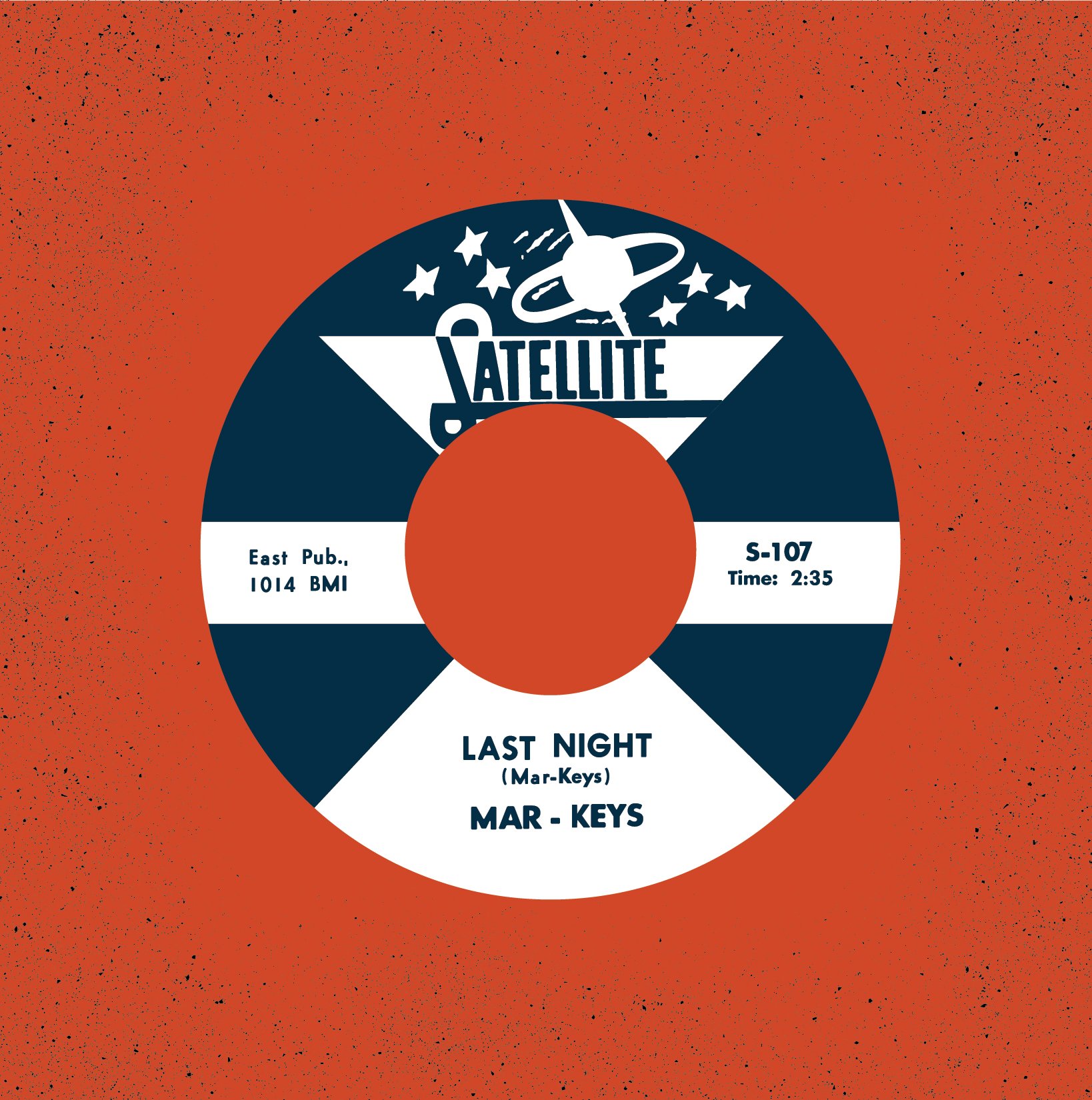
Illustration by J.D. Humphreys
• ‘LET’S GET THOSE MEMPHIS HORNS’ •
As Porter and Hayes refined their songwriting partnership, they were writing with more than Sam & Dave in mind. They were composing for the full power of the Stax Records sound. Another force helped turn their songs into hits: the horns.
Unlike Motown, which often relied on background vocalists to heighten a song’s emotional impact, Stax used brass and saxophones to answer singers, accent key phrases, and drive the rhythm. Porter and Hayes understood how to leave room for those instrumental voices, while the horn players gave their compositions an added layer of urgency and expression.
“I think of the horns as a second set of background singers,” said Wayne Jackson, a member of the Stax house band. “But you don’t have syllables, so you have to use dynamics tastefully. ‘I've Been Loving You Too Long’ has great horn parts. You can almost hear the horns saying words. They’re also used like a rhythm instrument as the stop line—definite punctuation.”
“I think of the horns as a second set of background singers.”
- Wayne Jackson, The Memphis Horns
“I’VE BEEN LOVING YOU TOO LONG” BY OTIS REDDING
The sound that would later be known as The Memphis Horns had been a part of Stax from the beginning, stretching back to The Mar-Keys’ 1961 hit “Last Night.” Though the name “Memphis Horns” was not made official until 1969, their unmistakable style had long been woven into recordings at Stax and beyond.
LISTEN TO “LAST NIGHT” BY THE MAR-KEYS
“All through the 1960s, we were running all over the place—Stax, Hi Records, Muscle Shoals,” said Andrew Love, saxophonist of The Memphis Horns. “They’d say, ‘Let’s get those Memphis horns.’ The name just stuck.”
• SOULSVILLE AT THE EPICENTER OF RACIAL JUSTICE •
Stax Records was more than a string of hit records. It was a distinctly American sound that helped define Black culture and excellence in the 1960s, rooted in gospel, blues, and the lived experience of African Americans, and shaped by the songwriters, musicians, producers, and artists who transformed Memphis into the capital of Southern soul.
What made Stax extraordinary was not only the music, but the inclusive example it set. In a still-segregated Memphis—a city that has long struggled to convert its Black majority into equal political power—Black and white musicians worked side by side to create something larger than themselves. The result was not appropriation, but collaboration. Not erasure, but amplification.
That lesson feels especially urgent today. In May 2026, Tennessee General Assembly Republicans approved a new congressional map that dismantled Memphis’s majority-Black district and, according to critics, a Jim Crow maneuver to dilute the political voice of Black voters in the city. During debate over the proposal, Justin J. Pearson, a Black state representative from Memphis, was physically blocked from entering a committee room by the white Sergeant at Arms—an image that many viewed as a stark reminder of how present-day Black citizens are marginalized in the very city once known as Soulsville.
Stax offered a radically different model: its greatest innovation came when Black creativity remained at the center and people of different backgrounds contributed in support of that vision. In a city and a nation still debating who gets heard and who gets shut out, the music made at Stax Records remains a powerful reminder of what United States can sound like when collaboration is rooted in respect, shared purpose, and a commitment to ensuring every voice matters.
Isaac Hayes
August 20, 1942 – August 10, 2008
Sam Moore
October 12, 1935 – January 10, 2025
David Prater, Jr.
May 9, 1937 – April 9, 1988
Steve Cropper
October 21, 1941 – December 3, 2025
Wayne Jackson
November 24, 1941 – June 21, 2016
Andrew Love
November 21, 1941 – April 12, 2012
Estelle Axton
September 11, 1918 – February 24, 2004